The Vial Problem: Why Compounded GLP-1s Keep Causing Overdoses
DR
Dr. Anna Chereshnevskyi · General Practitioner ·
Most of the debate about compounded weight loss drugs is about legality and cost. There is a quieter problem that has nothing to do with either, and it has been sending people to hospital.
As of May 2026, US regulators had logged more than 1,700 adverse event reports connected to compounded semaglutide and tirzepatide, split roughly 990 and 730 between the two. A meaningful share of those come down to something unglamorous: people drawing the wrong amount of liquid out of a vial.
Why the vial is the problem
When you get the brand version, it arrives as a pen. The dose is already in it. You dial a number, press, and the device delivers a fixed amount. It is difficult to get badly wrong.
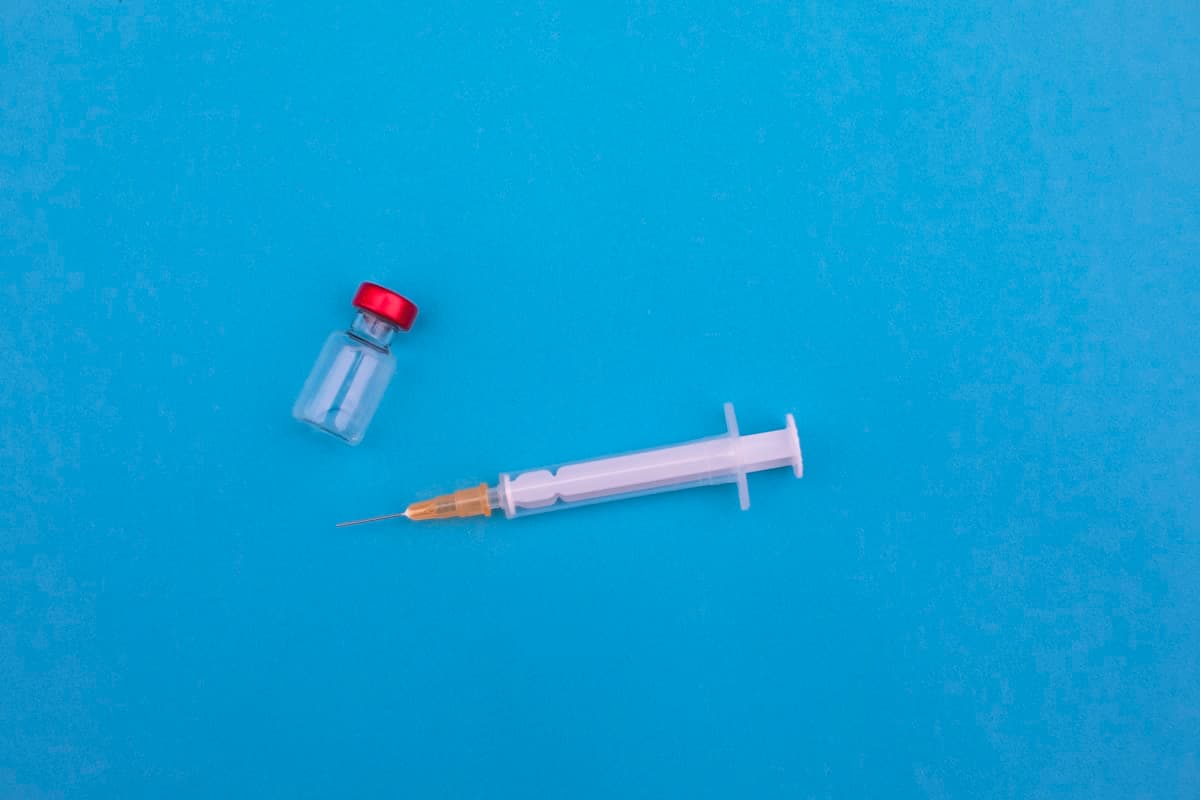
Compounded versions usually arrive as a vial of liquid and a separate syringe. You have to work out how much liquid equals your dose, draw exactly that much, and inject it. That is three chances to make a mistake, and the people doing it are often injecting themselves for the first time in their lives.
The specific trap is units. Instructions frequently tell people to inject a number of "units", but a unit is a mark on a syringe, not an amount of drug. How much medicine sits in one unit depends entirely on how concentrated that particular vial is, and concentrations vary between compounding pharmacies. So the same instruction can mean different doses depending on which vial you are holding.
Add the conversions between milligrams, milliliters, and units, and errors follow. Regulators have documented patients injecting five to ten times their intended dose, and in some reports five to twenty times.
What an overdose actually looks like
These drugs do not have a quick reversal. If you inject ten times your dose, it stays in your body for days.
Reported effects include severe nausea, persistent vomiting, abdominal pain, headache, dehydration, and fainting. Dehydration from continuous vomiting is what tends to put people in hospital. US regulators have estimated that roughly 100 hospitalizations and around 10 deaths may be linked to compounded GLP-1 products.
It is worth being clear about what that does and does not say. It does not mean these drugs are inherently dangerous, and the same molecules in pen form have been used safely by millions. It means the delivery method matters enormously, and moving from a metered pen to a vial and syringe transfers risk onto the patient.
Two other quality problems
Salt forms. Some compounders have used semaglutide sodium or semaglutide acetate rather than the base semaglutide in approved products. These are not the same active ingredient, and they have not been shown to be safe or effective. A product can be labeled semaglutide and still not be the substance that was tested in trials.
Outright counterfeits. Fake pens have reached patients. In documented cases the needles themselves were counterfeit and their sterility could not be confirmed, which adds infection risk to whatever is in the cartridge. Neither the manufacturer nor regulators can say what a counterfeit product contains.
Separately, regulators have sent more than 55 warning letters to telehealth companies since 2025 over false or misleading claims about compounded GLP-1 products. That is a large number for one product category, and it says something about how the market is being sold.
How to not become a statistic
If you are using a compounded product, a few things reduce risk considerably.
- Know the concentration of your specific vial in milligrams per milliliter, and know it changes if you switch pharmacy or refill.
- Ask your prescriber to write the dose in both milligrams and milliliters for your exact vial, rather than in units.
- Never convert a dose yourself, and never reuse an old instruction with a new vial.
- Use the syringe supplied with that vial, since syringe markings differ.
- Have someone walk you through the first injection in person.
- Buy only through a licensed pharmacy against a real prescription.
Why this matters for peptides generally
Here is the part that goes beyond weight loss drugs. In July an FDA advisory panel voted to recommend six peptides for compounding, including BPC-157 and TB-500. If regulators follow that advice, those peptides will start arriving through compounding pharmacies.
They will arrive as vials. Most will need reconstitution with bacteriostatic water first, which adds another calculation on top of the ones described above, since the final concentration depends on how much water you add.
The dosing errors documented with compounded semaglutide are not really a semaglutide problem. They are a vial and syringe problem. Everything moving into that supply chain inherits it, and peptide doses are typically measured in micrograms, where the margin for arithmetic error is smaller still.
Sources: FDA human drug compounding resources, including its alert on dosing errors with compounded injectable semaglutide and US Pharmacist on counterfeit and improperly compounded semaglutide.
DR
Written by
Dr. Anna Chereshnevskyi
General Practitioner
Dr. Chereshnevskyi is a general practitioner who graduated from Lviv National Medical University and currently practices at a state hospital in Ankara, Turkey. She specialises in primary care and follows the clinical literature on peptide therapies, metabolic health, and longevity research. She contributes to Peptide.pub as a medical reviewer and blog author, translating complex research into plain, evidence-based language.
About Peptide.pub →