Eighteen Vials of Counterfeit Retatrutide Went to a Lab. One Matched Its Label.
DR
Dr. Anna Chereshnevskyi · General Practitioner ·
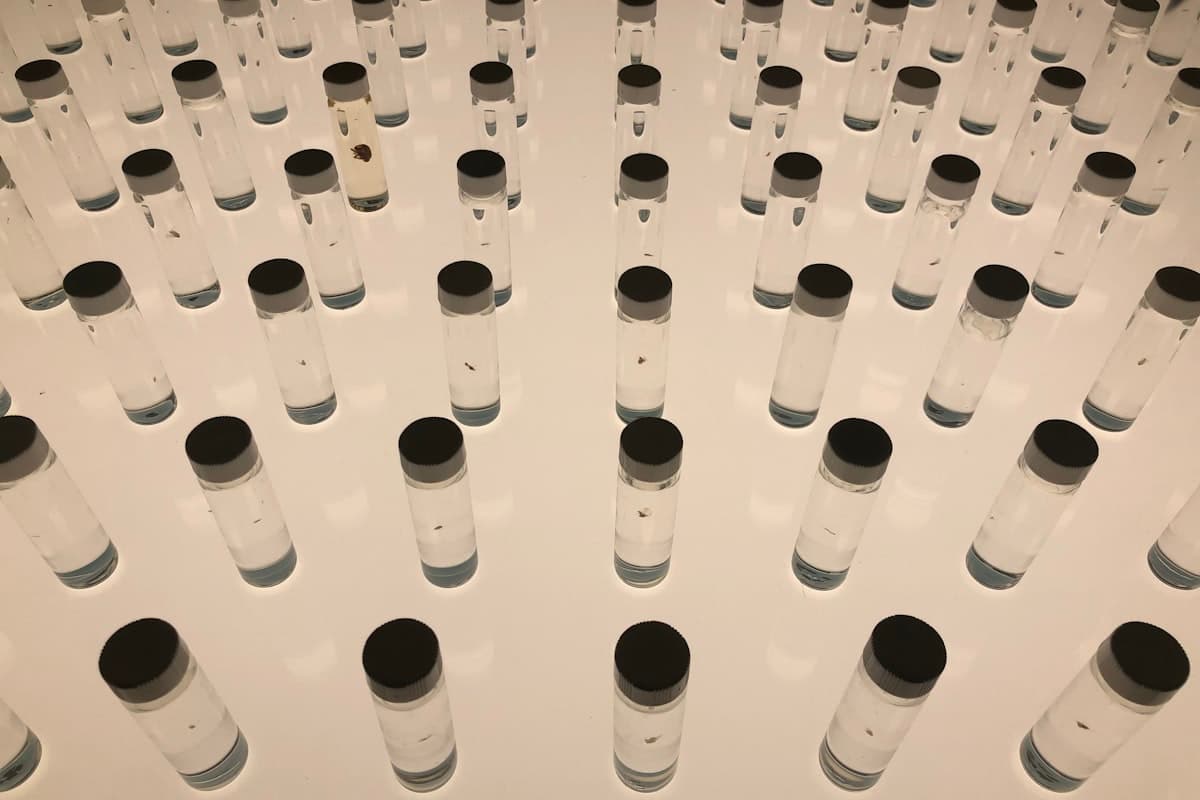
An Australian laboratory tested 18 counterfeit retatrutide samples. The results are worth stating plainly.
One of the eighteen matched its label. Roughly 30 percent contained more of the peptide than advertised. Roughly 30 percent contained less. One contained none of the active ingredient at all.
That is a failure rate of 17 out of 18. Not a minority of bad actors in an otherwise functioning market. Almost everything tested was wrong.
The 90 percent nobody talks about
Buried in that testing is the detail that deserves the most attention. In these vials, the peptide itself typically made up only about 10 percent of the contents.
The other 90 percent is unaccounted for.
This is not automatically sinister. Legitimate injectable products contain more than the active ingredient too: bulking agents, buffers, stabilizers. The difference is that in an approved product those substances are specified, tested, and chosen because they are safe to inject. In a counterfeit vial nobody has told you what they are, and nobody has checked.
So the honest description of what someone is injecting is not a peptide that might be underdosed. It is a mostly unidentified powder that contains some quantity of a peptide.
Why retatrutide in particular
There is a point here specific to this drug, and it applies no matter how careful a buyer is.
Retatrutide is not approved anywhere in the world. There is no legitimate consumer supply. Every vial sold under that name comes from an unverified source by definition, because no verified source exists.
That is an awkward fact next to the trial results. We covered TRIUMPH-4, where retatrutide produced the highest weight loss ever recorded in a Phase 3 obesity trial and cut knee pain sharply. Those results are real, and they were produced with pharmaceutical-grade drug, manufactured under controlled conditions, given at measured doses under medical supervision.
The vial someone buys online shares a name with that drug. Based on this testing, there is roughly a one in eighteen chance it shares much else.
More is not a bonus
It is tempting to read "30 percent contained more than advertised" as accidentally good value. It is the opposite.
Retatrutide is potent, and the trial protocols increase the dose slowly over months precisely to keep side effects tolerable. Someone following what they believe is a careful escalation, using a vial containing more than the label says, is escalating faster than they think.
This is the same failure mode we described in the dosing errors behind more than 1,700 adverse event reports, arriving by a different route. There the arithmetic was wrong. Here the arithmetic is right and the vial is wrong. The person ends up equally overdosed.
Irish hospitals have issued warnings against unsupervised retatrutide use after patients were hospitalized.
The scale of it
Two figures put the testing in context.
Of peptide imports inspected during May and June 2026, about 23 percent came from illegitimate manufacturers. Only 4 percent were refused entry. Australian authorities separately destroyed more than 94,500 unapproved peptide products.
Those numbers describe a supply chain where a large share of the product is illegitimate and most of it gets through anyway.
Three problems, one vial
Reading this alongside the other cases this year, a pattern has settled into place. There are three separate things that can be wrong with what arrives at your door, and they are independent of each other.
- It might not be what it says. Wrong quantity, wrong substance, or nothing at all. That is this testing, and it is what forged certificates of analysis are designed to conceal.
- It might be contaminated. Bacterial endotoxins survive sterilization and no purity test looks for them, which is what drove August's recall.
- It might be injected wrongly. Vials and syringes shift the arithmetic onto the patient.
A product can be genuine and contaminated. It can be clean and mislabeled. Getting one of these right tells you nothing about the other two, and no single document covers more than one of them.
For a drug that does not legitimately exist on the consumer market, none of these risks can be managed by shopping carefully. That is the uncomfortable conclusion of this particular dataset.
Source: Partnership for Safe Medicines, August 31, 2026 roundup.
DR
Written by
Dr. Anna Chereshnevskyi
General Practitioner
Dr. Chereshnevskyi is a general practitioner who graduated from Lviv National Medical University and currently practices at a state hospital in Ankara, Turkey. She specialises in primary care and follows the clinical literature on peptide therapies, metabolic health, and longevity research. She contributes to Peptide.pub as a medical reviewer and blog author, translating complex research into plain, evidence-based language.
About Peptide.pub →